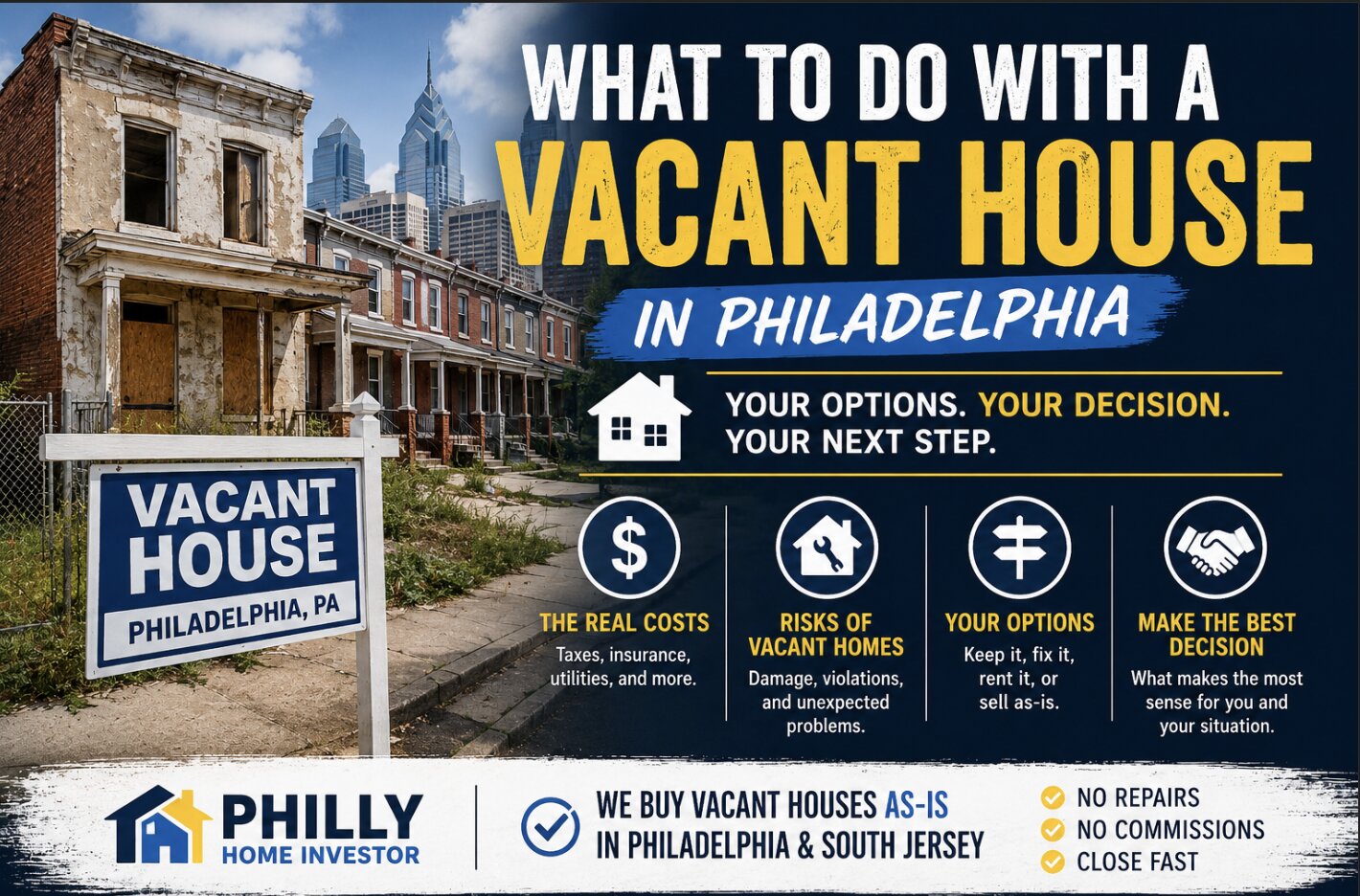
At first, owning a vacant house might not seem like a huge deal.
Then a few months go by…
And suddenly you’re paying for:
• taxes
• insurance
• utilities
• maintenance
• surprise problems you didn’t even know existed
Meanwhile, the house is just… sitting there.
If you own a vacant property in Philadelphia, you’re definitely not alone.
Vacant homes are extremely common throughout the city – especially with inherited properties, older rowhomes, landlord situations, and houses needing repairs.
The important thing to know is:
- You have options.
Let’s walk through them.
What Counts as a Vacant House?
A vacant house is a property that has been unoccupied for an extended period.
This can happen for many reasons:
• inherited properties
• landlords moving on from rentals
• homes needing repairs
• foreclosure situations
• owners relocating
Sometimes a house sits vacant intentionally.
Other times…
Life just happens.
Why Vacant Houses Become Expensive Quickly
This is the part many homeowners underestimate. Even when nobody is living there, the bills don’t stop. Ever watch the movie “The Money Pit” well…..keep reading.
Common Costs of a Vacant Property
Property Taxes
Philadelphia property taxes continue whether the house is occupied or not. And if taxes fall behind… –> that can create much bigger problems later.
Insurance
Vacant property insurance is often:
• more expensive
• more limited
• harder to maintain
Many homeowners don’t realize their standard policy may not fully cover a long-term vacant property.
Utilities
Even minimal utility usage still costs money. And shutting everything off completely can sometimes create new issues. (Especially during Philly winters.)
Maintenance
Vacant houses tend to deteriorate faster because:
• small leaks go unnoticed
• moisture builds up
• pests move in
• weather damage worsens
A house sitting empty for too long can turn minor problems into expensive ones.
The Philadelphia Factor
Philadelphia has a lot of:
• older rowhomes
• tightly packed properties
• strict city enforcement
That means vacant houses often attract:
• L&I violations
• maintenance notices
• neighborhood complaints
The city tends to notice vacant properties pretty quickly.
Common Problems With Vacant Houses
Some of the most common issues include:
• vandalism
• break-ins
• burst pipes
• roof leaks
• code violations
• squatters
• trash buildup
Not exactly the kind of “investment property” most people imagined.
What Are Your Options?
If you own a vacant house in Philadelphia, you generally have a few paths forward.
Option 1: Keep the Property
This may make sense if:
- the property is in good condition
- you plan to move back in
- you want to rent it later
- you can comfortably afford the carrying costs
Option 2: Renovate the Property
Some owners decide to:
• fix the house up
• refinance it
• rent or sell later
This can work well…
But renovations in Philadelphia often take:
- longer than expected
- cost more than expected
Especially with older homes.
Option 3: Rent the Property
Turning a vacant house into a rental can create income, but it also comes with:
• repairs
• tenant management
• licensing requirements
• ongoing maintenance
Landlording is not exactly passive income when the toilet explodes at 2am.
Option 4: Sell the House As-Is
This is one of the most common solutions. Selling as-is means:
- no repairs
- no cleaning
- no updates
- no dealing with contractors
Many homeowners choose this route simply to stop the ongoing stress and expenses.
Can You Sell a Vacant House in Philadelphia As-Is?
Absolutely.
Many vacant properties in Philadelphia are sold:
• needing repairs
• with violations
• with belongings still inside
• after sitting empty for years
Vacant homes are very common in the investor market.
How Long Is “Too Long” for a Vacant House?
There’s no exact number… But generally: -> the longer a house sits empty, the more problems tend to appear. Especially in older Philadelphia properties.
Warning Signs a Vacant House Is Becoming a Bigger Problem
Some signs include:
• growing maintenance issues
• city notices or violations
• rising holding costs
• vandalism or break-ins
• stress from managing the property
At some point, many owners decide:
-> “I just don’t want to deal with this anymore.”
A Simple Way to Think About It
Ask yourself: -> Is this property helping your life… or creating more stress? That answer usually points people in the right direction.
Quick Summary
Vacant houses in Philadelphia can become expensive and difficult to manage over time due to taxes, maintenance, insurance, and city violations. Homeowners typically choose to keep, renovate, rent, or sell the property as-is, depending on their situation.
FAQ Section
What should I do with a vacant house in Philadelphia?
Your options typically include keeping it, renovating it, renting it out, or selling it as-is.
Can I sell a vacant house as-is?
Yes. Many vacant homes in Philadelphia are sold as-is without repairs or cleaning.
Are vacant houses expensive to maintain?
They can be. Costs often include taxes, insurance, utilities, maintenance, and city violations.
Can a vacant house get L&I violations?
Yes. Vacant properties in Philadelphia frequently receive code violations or maintenance notices.
How long can a house sit vacant?
There is no strict limit, but the longer a property sits empty, the greater the risk of damage and ongoing costs.